

Snap On vs Screw License Plate Frame: Which Is Better for Canadian Drivers?
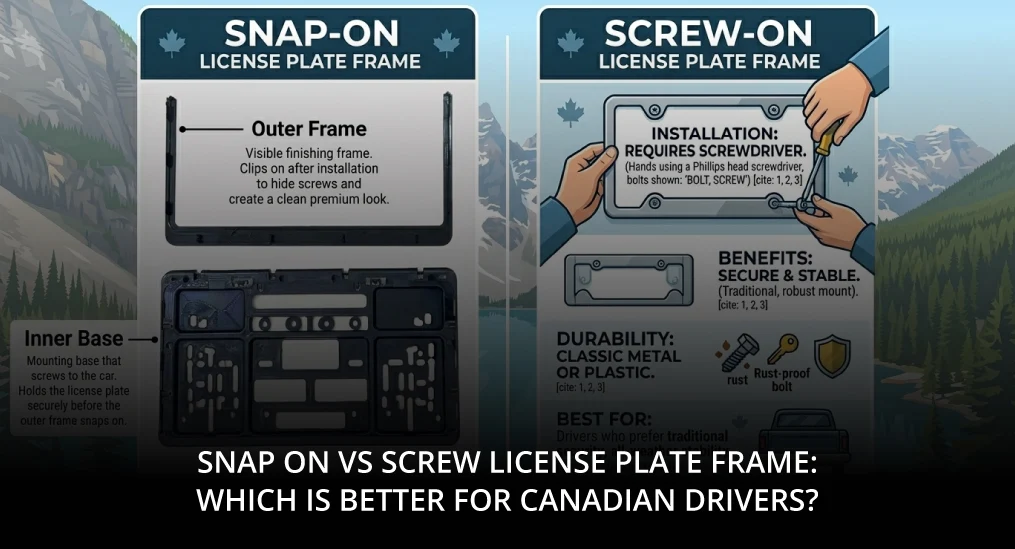
Many Canadian drivers compare snap on vs screw license plate frame setup to figure what’e the best for their vehicle. But along with the vehicle type, weather conditions, road salt, theft concerns, and vehicle design, all affect which framework is best long-term. Many drivers still use traditional screw-mounted frames because they are familiar and widely available. However, newer snap-on systems are becoming popular because they offer cleaner installation, reduced vibration, and better protection during Canadian winters. The right frame also depends on how often you remove plates, the type of vehicle you drive, and whether you want a factory-style appearance. A poor-quality frame can loosen over time, damage paint, or crack in freezing temperatures. Drivers researching a reliable license plate frame today are also paying closer attention to corrosion resistance, ease of maintenance, and legal plate visibility across Canadian provinces. Why Canadian Drivers Compare These Frames A growing number of vehicle owners now look beyond appearance when buying plate frames. Durability and fit matter more than ever. The 2026 license plate frame comparison now includes factors such as: Winter salt resistance for long-term exterior protection Tight fitment that reduces highway vibration noise Easier cleaning during the snow and slush buildup months Protection against rust stains near mounting areas Better compatibility with newer vehicle body styles Reduced scratching around painted bumper surfaces Traditional screw-in frames have existed for decades. They are simple and inexpensive. But many cheaper models become loose after repeated temperature changes. Snap-on systems improved because manufacturers redesigned mounting channels and locking tabs for Canadian weather conditions. When drivers look for the best license plate frames Canada brands offer them many choices. But only the ones that fit, do not corrode, and support the vehicle’s long-term stay with drivers. Snap On vs Screw License Plate Frame: Key Differences The biggest difference between these systems is how the outer frame attaches to the mounting base. How Screw-In Frames Work Traditional screw-in frames rely entirely on exposed screws. The frame and plate remain attached through direct mounting pressure. These frames are common because: They are inexpensive and easy to find Most drivers already understand the installation steps Replacement screws are widely available Many older vehicles use this setup by default Some metal frames provide decent rigidity Universal designs fit many vehicle models However, exposed screws can eventually rust. This is especially common in provinces with heavy winter salting. Some lower-quality frames also rattle during highway driving. How Snap-On Frames Work Snap-on systems use a mounting base attached to the vehicle first. The outer frame then locks into place over the plate. This design creates a cleaner appearance while protecting mounting hardware from weather exposure. Drivers researching snap-on license plate frame benefits often prefer the reduced vibration and hidden fastener design because it keeps the plate area cleaner during winter driving. Many newer vehicles also have curved bumpers or tighter plate recesses. Snap-on systems usually adapt better to those shapes. Snap On vs Screw License Plate Frame for Canadian Winters Canadian weather changes how plate frames perform over time. Snow, ice, freezing rain, and salt exposure place constant pressure on mounting systems. Cheap plastic can crack within one winter season. A proper snap on vs screw license plate frame decision should always consider climate durability first rather than appearance alone. Problems Common With Low-Quality Screw Frames Budget screw-in frames often develop: Rust around exposed mounting screws Paint scratches from frame movement Cracking during freezing temperatures Plate bending from uneven pressure points Loose hardware after repeated freeze-thaw cycles Corrosion stains near mounting holes Metal frames may survive longer structurally, but they can still corrode if protective coatings wear away. Why Snap-On Systems Handles Winter Better Quality snap-on frames distribute pressure more evenly across the plate surface. This helps reduce stress fractures during cold weather. Many drivers specifically choose a License Plate Frame for Winter that includes hidden mounting protection because road salt frequently damages exposed hardware during long Canadian winters. Snap-on covers also help reduce moisture buildup around screws. That small difference can significantly improve long-term durability. License Plate Frame Comparison: Which Option Looks Better? Appearance matters more today because vehicle styling has become cleaner and more minimal. Modern SUVs, EVs, and luxury sedans often look better with concealed mounting systems. Screw-In Frames Screw-in frames usually appear more traditional. Visible screws can make the plate area look cluttered, especially if screw caps fade or rust. Cheap chrome-plated frames also peel after prolonged winter exposure. Snap-On Frames Snap-on systems create a smoother finish because the mounting hardware stays hidden. This gives the vehicle a more factory-installed appearance. Drivers shopping for a Best Snap-On License Plate Frame often prioritize flush fitment because uneven frames can make newer vehicles look poorly maintained. Premium snap-on designs also reduce plate movement at higher speeds. Installation and Maintenance Differences Installation is another major deciding factor for Canadian drivers. Many people assume snap-on systems are complicated, but most modern designs are straightforward. Many drivers searching how to install license plate frame in Canada assume it requires special tools. With a snap-lock design, it does not. The mounting screws secure the base alignment, while the snap channel helps reduce vibration during everyday driving. Screw-In Installation Screw-in systems typically require: Manual screw alignment during installation Regular tightening checks after winter driving Replacement hardware if screws rust or strip Careful positioning to avoid plate bending Occasional cleaning around exposed screw heads Extra caution near painted bumper surfaces Snap-On Installation Snap-on systems generally simplify long-term maintenance because the outer frame removes more easily during cleaning or plate replacement. Drivers who frequently wash vehicles during winter often appreciate this convenience. A properly fitted Snap-On License Plate Frame also helps reduce rattling sounds that sometimes occur with loose screw-mounted systems. Are Snap-On Frames More Secure? Security depends heavily on design quality. Low-cost products in both categories can fail prematurely. However, premium snap-on systems now include reinforced locking tabs and stronger mounting bases. This improves theft resistance while maintaining easy installation. Mistakes Drivers Should Avoid Many