

Are License Plate Frames Legal in Canada? Laws by Province (2026 Guide)

Drivers across Canada often ask a simple question: are License Plate Frames Legal in Canada on their vehicles? The short answer is yes, but only under certain conditions. Canadian provinces allow frames as long as they do not block any essential information on the plate. The rules focus less on the frame itself and more on whether the plate remains fully visible. If the frame hides the province name, plate numbers, or validation sticker, a driver could face a ticket. Many people don’t realize that even frames provided by dealerships can technically violate visibility rules. Understanding what makes a legal license plate frames setup is the best way to avoid fines while still protecting the plate and surrounding paint. Are License Plate Frames Illegal in Any Canadian Province? No Canadian province completely bans license plate frames. However, frames become illegal if they obstruct the visibility of plate information. Why Plate Visibility Matters for Canadian Law Canadian traffic laws prioritize one simple requirement: license plates must be readable at all times. Police officers, toll systems, and traffic cameras rely on clear plates to identify vehicles quickly. When a frame blocks any part of that information, it becomes a problem. A Snap-On License Plate Frame works well because it holds the plate firmly while keeping the edges open. The frame sits around the perimeter rather than overlapping important text, which helps maintain full visibility. This design matters more than many drivers realize. Plates are exposed to weather, vibration, and road debris. A loose frame can shift slightly over time, slowly covering characters or stickers. When that happens, a driver may unknowingly break the rule tied to License Plate Frames Legal in Canada regulations. The safest approach is always to choose a frame that fits precisely around a standard Canadian plate and leaves all markings unobstructed. License Plate Frame Laws by Province Although Canada does not have one national traffic law, most provinces follow similar principles when it comes to license plate visibility. In Ontario, the Highway Traffic Act requires that plates remain clearly visible and free from obstruction. Even a small frame that covers the word “Ontario” can lead to a fine. Officers often add this ticket during routine traffic stops if the plate is partially hidden. British Columbia has similar guidelines under its Motor Vehicle Act. The plate must remain readable, and drivers can be fined if frames make the plate illegible. Alberta follows the same principle, emphasizing that numbers and registration details must stay unobstructed. Because of these consistent rules, drivers focus on searching for designs that avoid covering any part of the plate. A frame that fits precisely around the plate without overlapping edges helps maintain compliance with License Plate Frames Legal in Canada requirements. This is why these are the best license plate frames Canada drivers can use. Understanding the local interpretation of license plate frame legal canada guidelines helps drivers avoid unnecessary tickets while still using a protective frame. What Makes a License Plate Frame Legal In Canada The difference between a legal and illegal frame usually comes down to visibility. If any part of the plate information is hidden, the frame may violate provincial regulations. Drivers often assume that only numbers matter, but several other details must remain visible. These typically include the province name, validation stickers where used, and reflective elements built into the plate. By knowing how to install license plate frame canada properly, drivers can ensure the plate sits centred and fully visible. Correct installation prevents shifting that could slowly block characters or stickers. A properly mounted frame also reduces rattling and vibration. Over time, those small movements can push frames slightly out of alignment. When the frame stays snug, the risk of accidental obstruction drops significantly, helping maintain compliance with License Plate Frames Legal in Canada guidelines. This is another reason legal license plate frames are usually designed with minimal edges and precise measurements that match the 6 by 12 inch Canadian plate standard. Winter Conditions Can Affect Plate Visibility Canadian winters add another layer of complexity. Snow, slush, and road salt often collect around the plate area, especially during long highway drives. A License Plate Frame for Winter can help keep the plate stable while minimizing areas where snow can build up. When frames have large decorative borders or deep edges, slush tends to collect and freeze there. Drivers sometimes discover after a snowstorm that ice has formed along the bottom of the frame. When that buildup spreads across the plate, visibility drops quickly. That can technically violate the visibility requirement associated with license plate frame legal canada rules. Minimal frames allow snow and moisture to slide off more easily. They also reduce the chance of ice expanding and pushing the frame out of place during freeze-thaw cycles. Keeping the plate clear during winter is just as important as choosing the right frame design. Common Reasons Drivers Get Tickets for Plate Frames Many drivers receive plate-related tickets without realizing what caused the problem. In most cases, the issue comes down to small details that block part of the plate. One common mistake is using decorative frames that cover the province name. Another is installing frames slightly off-center so that one corner overlaps a number. Even clear plastic plate covers can create glare for traffic cameras or police headlights at night. In some provinces, these covers are treated as obstructions because they affect readability. Drivers often assume their frames are safe simply because they came from a dealership. However, those frames frequently include branding along the bottom edge, which can partially cover slogans or text and may not meet License Plate Frames Legal in Canada requirements. These situations show why understanding license plate frame legal canada requirements is important for everyday drivers. Choosing the Right Frame for Canadian Roads Drivers want a frame that protects the plate without introducing legal risk. That balance comes down to fit, material, and overall design. The best frames are built specifically for Canadian plates and
How to Install a License Plate Frame in Canada (No Tools Needed)
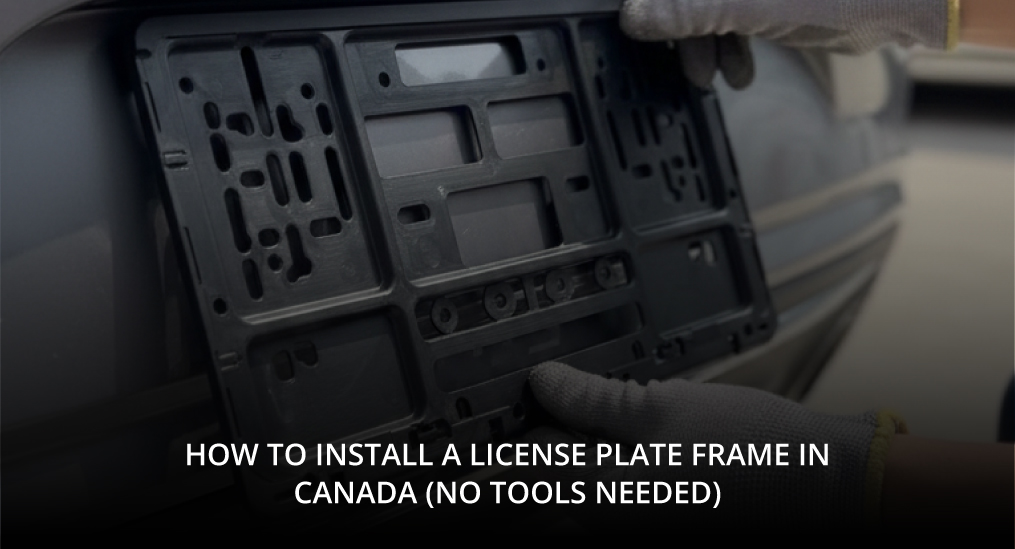
If you’re looking up how to install license plate frame Canada, the process is straightforward when you’re using a snap-lock design built for Canadian plates. A properly engineered snap-on frame mounts using your factory screw points, requires no drilling, and protects both paint and plate. This guide explains exactly how to do it correctly, without tools, damage, or compliance issues. Understanding Canadian Plate Size and Legal Requirements Before you install license plate frame components on your vehicle, confirm your plate size and legal obligations. Standard passenger vehicle plates across most provinces measure 6 inches by 12 inches. Frames must fit that dimension precisely to avoid bending the plate or covering required information. Under license plate frame legal canada guidelines, the frame cannot obstruct: The province or territory name The registration sticker (where applicable) The plate number characters Any validation markings If any part of the plate is hidden, you risk a fine. A properly sized snap-on frame is designed to sit around the plate edges without covering visible elements. Why a No-Drill Frame Matters in Canada Drilling into a bumper or trunk panel introduces long-term problems. Canadian winters expose vehicles to road salt, moisture, and freeze-thaw cycles. Even small penetrations can allow corrosion to begin behind painted surfaces. A Snap-On License Plate Frame uses existing mounting screws and a locking perimeter to hold the plate securely in place. There is no need to create new holes, which means: No rust points No cracked plastic bumpers No chipped paint No compromised factory finish This matters especially on newer vehicles where preserving resale value is important. How the Snap Mechanism Works Unlike basic frames that rely loosely on screws alone, a snap-on design uses a locking channel that grips the plate edge evenly. When installed correctly, the perimeter clips engage and distribute pressure across the frame. Many drivers searching how to install license plate frame in canada assume it requires special tools. With a snap-lock design, it does not. The mounting screws secure the base alignment, while the snap channel prevents vibration. The locking tabs are engineered to: Apply consistent edge pressure Prevent metal-on-metal movement Eliminate plate rattle Maintain alignment through temperature shifts This design is particularly effective for Canadian roads, where vibration and cold contraction can loosen standard mounts. Step-by-Step: How to Install License Plate Frame in Canada Follow these steps carefully. The process requires no drilling and no specialty tools. 1. Inspect the Mounting Area Remove the existing plate if necessary. Clean the mounting surface with a microfiber cloth. Remove dirt, salt residue, and grit. This prevents trapped debris from scratching paint. Check that factory screw points are intact and not stripped. 2. Position the Plate Place the 6” x 12” plate against the factory mounting area. Ensure the top edge is level and centered between the mounting holes. The registration sticker must remain visible. Confirm that the province name and plate characters will not be covered once the frame is attached. 3. Align the Frame Place the snap-on frame over the plate. The mounting holes in the frame should align perfectly with the vehicle’s existing screw points. There should be no forcing or bending. A correctly sized frame sits flush around the perimeter without flexing the plate. 4. Secure Using Factory Screws Insert the original screws through the frame and into the mounting holes. Tighten them firmly, but do not overtighten. The screws anchor the top portion of the frame and plate. They do not need to carry a full structural load because the snap channel will secure the perimeter. No drilling is required at any stage. 5. Engage the Snap-Lock Channel Starting at the bottom edge, press the frame inward until you hear or feel the snap tabs engage. Work evenly along the sides to ensure full perimeter contact. The locking channel should grip the plate edge firmly without warping it. You should not see gaps between the frame and plate once engaged. 6. Perform the Final Safety Check Gently press along all edges. There should be: No movement No rattling No visible plate obstruction No flexing Shake the plate lightly by hand. If installed properly, it will remain stable and secure. This is how to install license plate frame canada laws require, correctly, without tools, drilling, or risk of damage. Confirming Proper Fit A correctly installed snap-on frame will sit flush against the vehicle body. The plate should not bow outward or tilt. Check that: All snap tabs are engaged Screws are snug No corners are lifted Plate remains fully visible If anything feels loose, remove and reseat the snap channel evenly. Do not force one side more than the other. Drivers looking for the best license plate frames canada option typically prioritize secure retention and compliance. A properly aligned snap-lock design meets both criteria. Preventing Rattle and Vibration Plate rattle is common when frames rely solely on screws. In Canadian conditions, temperature shifts cause metal to contract and expand, loosening basic mounts. The snap perimeter distributes pressure evenly. This reduces micro-movement between: Plate and frame Frame and vehicle body If vibration persists, confirm that: Debris is not trapped behind the plate Snap tabs are fully seated Screws are not stripped A properly installed snap-on system eliminates metal-on-metal contact, which prevents long-term wear marks. Winter Durability Considerations Canadian winters are harsh on exposed hardware. Salt and moisture can accumulate behind loosely mounted plates. A License Plate Frame for Winter should: Resist corrosion Maintain tension in freezing temperatures Avoid trapping water Prevent rust streaking under the plate Because snap-on frames do not require additional drilled holes, they eliminate extra entry points for moisture. This protects painted surfaces and prevents hidden corrosion. After heavy snowfall or road salting, rinse behind the plate during routine washing to remove buildup. Paint Protection and Rust Prevention When improperly installed, plates can vibrate against painted surfaces. Over time, this causes scratches and rust staining. A correctly installed snap-on frame: Creates even spacing Prevents plate edge contact Reduces movement Avoids pressure points There
Why Canadian Drivers Need a Secure-Fit License Plate Frame for Winter

Canadian weather is tough, and with road salts, freezing rain, packed snow, and wild temperature swings, many parts of your vehicle get tested. But one detail that most people don’t think about until it’s too late is how this weather change affects the license plate frame. A cheap or loose frame can crack, rust, rattle, or even mark up the paint once winter hits. That’s why picking the right License Plate Frame for Winter is crucial in avoiding headaches when the weather turns. So what actually happens to license plate frames during a Canadian winter? The Hidden Winter Challenges Canadian License Plates Face If you’ve driven through a Canadian winter, you’ve seen the mess up close, how driving conditions in Canada create a perfect storm of stressors for exterior vehicle accessories. 1. Snow Buildup and Ice Expansion Slush loves to pack itself into corners and gaps. If your frame has space around the plate, snow gets in, melts a bit, then freezes again. That freeze-thaw cycle can slowly push the frame out of shape or make it crack. 2. Road Salt and Corrosion Salt is essential for winter safety, but it’s brutal on exposed metal. Many frames rust within a single season, leaving stains on the plate area and sometimes damaging the bumper itself. 3. Ice expansion The annoying part is that ice expands. So even a small amount of trapped moisture can turn into pressure that pries at the frame over time. 4. Constant Vibration Winter roads are bumpy, and the cold weather makes cheaper plastics more brittle. If a frame isn’t snug, it’ll rattle, shift, and eventually loosen. These problems explain why so many drivers replace frames year after year, often without realizing that a secure-fit design can eliminate this issue. What Makes a License Plate Frame for Winter Truly Reliable in Canada? Not all frames are built for Canadian Winter weather. You don’t need a frame that “kind of” fits. You want something that stays put and doesn’t react badly to moisture and salt. 1. Secure Fit Above All Else A frame that fits perfectly doesn’t move when the temperature drops or the roads become uneven. This is where frames like a SLIDE-IN LICENSE PLATE FRAME or a SNAP-ON LICENSE PLATE FRAME really help. They’re designed to hold the plate firmly in place instead of relying on a setup that can wiggle loose over time. 2. Durable, Weather-Resistant Materials For Canadian winters, durable ABS-style plastic is usually the safer choice. It won’t corrode like metal, and it won’t leave rust streaks after a few months of salted roads. 3. Simple, Straightforward Designs Big, bulky frames can trap snow and slush. A cleaner, minimal frame gives less space for buildup to sit and freeze. 4. Tool-Free Installation Frames that require drilling or over-tightening screws often lead to cracked plates or scratched paint. A proper winter frame should install cleanly and remove just as easily when needed. Why Secure Fit Matters in a License Plate Frame for Winter Winter damage often shows up around the plate: scratched paint, rust stains, and chipped clear coat caused by vibration, trapped slush, and corroding materials. A secure-fit, durable plastic license plate frame for winters help reduce direct contact and movement, so that your vehicle stays cleaner and better protected all season. A loose frame becomes a liability in winter, because If it shifts, it can partially cover numbers or stickers If it rattles, it can slowly rub your paint If snow packs in and freezes, it can push the frame out Drivers searching for the best license plate frames canada offers should prioritize secure-fit designs for exactly these reasons. A snug, rattle-free frame stays aligned through snowstorms, highway driving, and freeze-thaw cycles. Are License Plate Frames Legal in Canada? One common concern among Canadian drivers is compliance. The good news? Frames are legal, but with a few conditions. To authorize a license plate frame legal canada drivers must: Not cover plate numbers, letters, or province name Not obstruct validation stickers or registration tags Not interfere with plate illumination Secure-fit frames designed specifically for Canadian plates are built around these regulations, ensuring full visibility without requiring constant adjustment after winter driving. How to Install a License Plate Frame Without Tools? Many drivers hesitate to upgrade simply because they expect a complicated installation. In reality, learning how to install license plate frame for winter systems with modern secure-fit designs takes minutes. For a SNAP-ON LICENSE PLATE FRAME Place the license plate holder against your car’s mounting area and line up the screw holes with the holes on your vehicle. Use your license plate screws to fasten the holder to the car. Tighten until snug, but do not overtighten it. Gently pull the bottom edge of the snap-on holder outward. This creates an opening for the license plate. Slide the plate into the frame, then press the bottom edge closed until you hear a firm click. This sound confirms the plate is locked in place. Give the plate a quick tug to make sure it’s secure and doesn’t shift. Ensure all numbers and stickers remain fully visible. For a SLIDE-IN LICENSE PLATE FRAME Place the four vertical frame pieces on your car’s mounting area, aligning their screw holes with the holes on your vehicle. These pieces act as the main support. Use your license plate screws to attach all the pieces to the car. Tighten until snug. These will stay mounted on the vehicle. Slide your license plate between the mounted vertical pieces. It should move in easily from the side, with the slots guiding the plate into place. Tighten or adjust the side pieces if needed, until the plate sits firmly and evenly Make sure the plate is centered, doesn’t wiggle, and all letters and stickers stay clearly visible. No drills. No screwdrivers. No risk of cracking the plate in cold weather. This simplicity is especially valuable in winter when outdoor installations are less than comfortable. Why Minimal Design Matters in Harsh Weather?