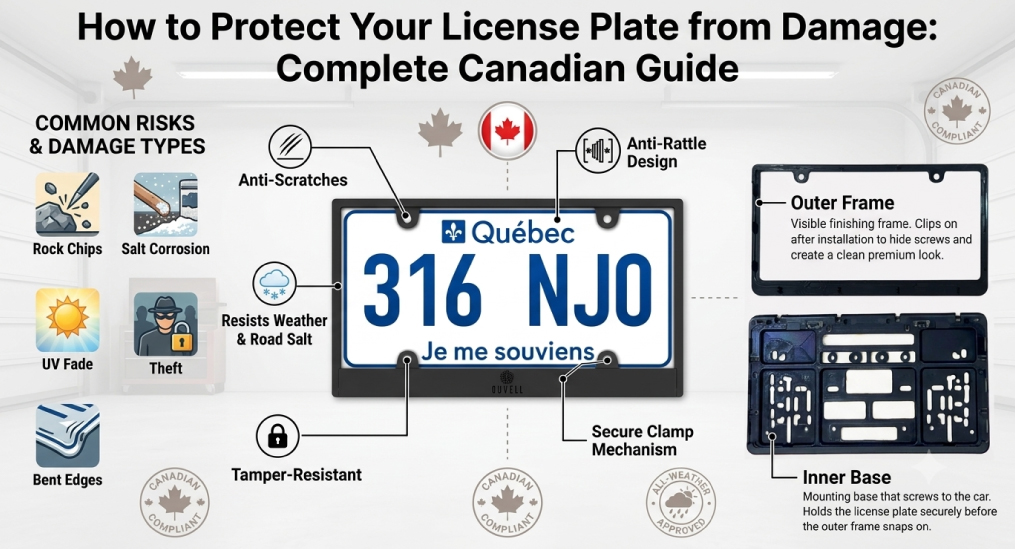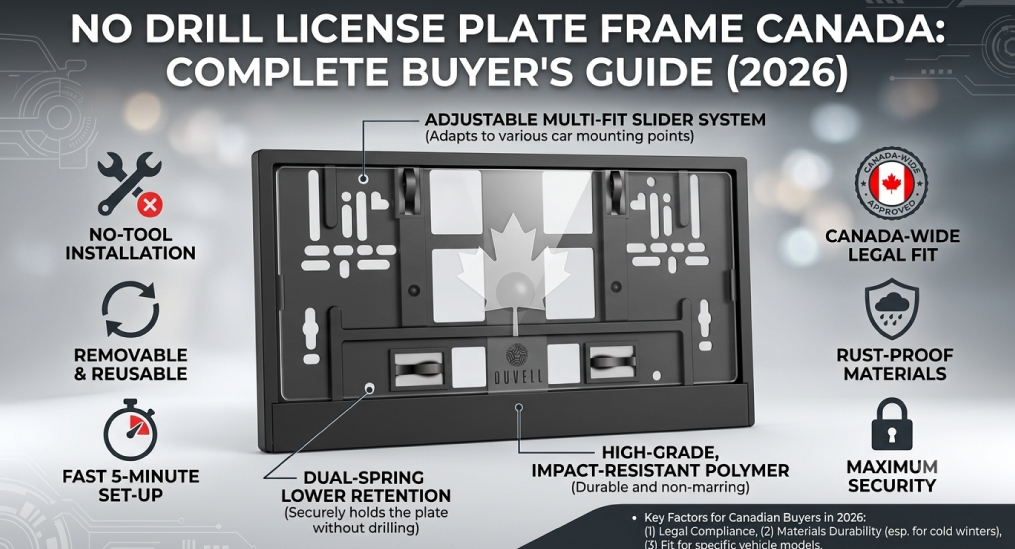

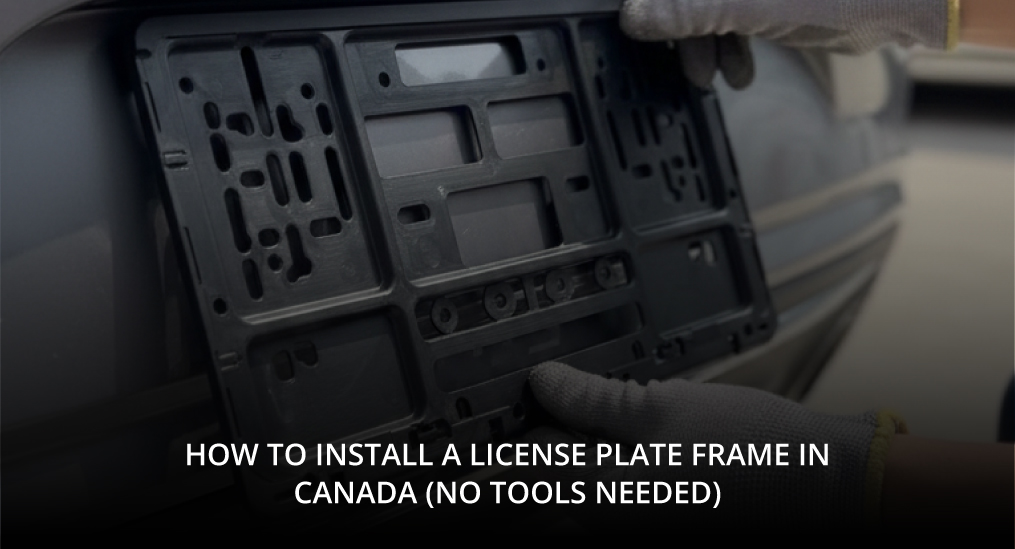
If you’re looking up how to install license plate frame Canada, the process is straightforward when you’re using a snap-lock design built for Canadian plates.
A properly engineered snap-on frame mounts using your factory screw points, requires no drilling, and protects both paint and plate.
This guide explains exactly how to do it correctly, without tools, damage, or compliance issues.
Understanding Canadian Plate Size and Legal Requirements
Before you install license plate frame components on your vehicle, confirm your plate size and legal obligations. Standard passenger vehicle plates across most provinces measure 6 inches by 12 inches. Frames must fit that dimension precisely to avoid bending the plate or covering required information.
Under license plate frame legal canada guidelines, the frame cannot obstruct:
- The province or territory name
- The registration sticker (where applicable)
- The plate number characters
- Any validation markings
If any part of the plate is hidden, you risk a fine. A properly sized snap-on frame is designed to sit around the plate edges without covering visible elements.
Why a No-Drill Frame Matters in Canada
Drilling into a bumper or trunk panel introduces long-term problems. Canadian winters expose vehicles to road salt, moisture, and freeze-thaw cycles. Even small penetrations can allow corrosion to begin behind painted surfaces.
A Snap-On License Plate Frame uses existing mounting screws and a locking perimeter to hold the plate securely in place. There is no need to create new holes, which means:
- No rust points
- No cracked plastic bumpers
- No chipped paint
- No compromised factory finish
This matters especially on newer vehicles where preserving resale value is important.
How the Snap Mechanism Works
Unlike basic frames that rely loosely on screws alone, a snap-on design uses a locking channel that grips the plate edge evenly. When installed correctly, the perimeter clips engage and distribute pressure across the frame.
Many drivers searching how to install license plate frame in canada assume it requires special tools. With a snap-lock design, it does not. The mounting screws secure the base alignment, while the snap channel prevents vibration.
The locking tabs are engineered to:
- Apply consistent edge pressure
- Prevent metal-on-metal movement
- Eliminate plate rattle
- Maintain alignment through temperature shifts
This design is particularly effective for Canadian roads, where vibration and cold contraction can loosen standard mounts.
Step-by-Step: How to Install License Plate Frame in Canada
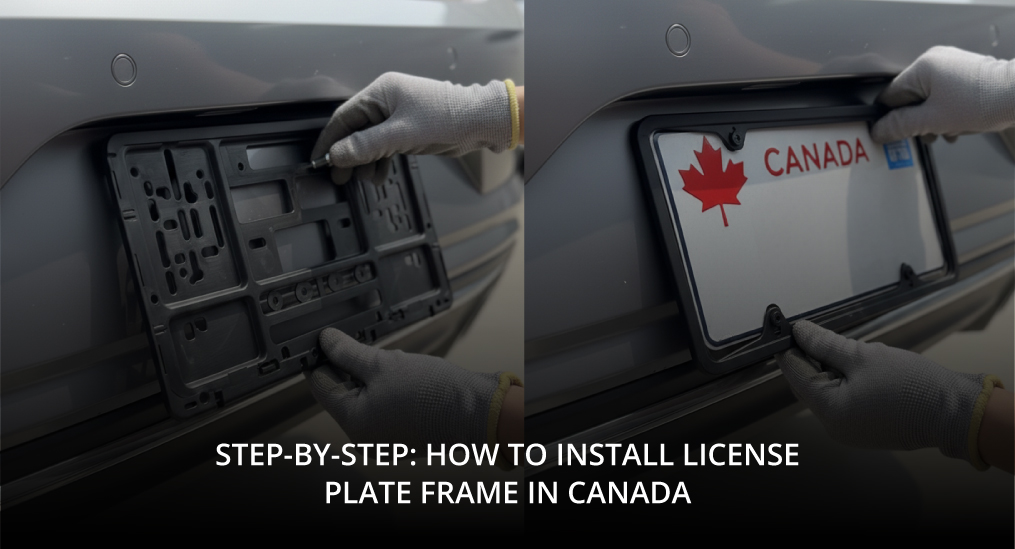
Follow these steps carefully. The process requires no drilling and no specialty tools.
1. Inspect the Mounting Area
Remove the existing plate if necessary. Clean the mounting surface with a microfiber cloth. Remove dirt, salt residue, and grit. This prevents trapped debris from scratching paint. Check that factory screw points are intact and not stripped.
2. Position the Plate
Place the 6” x 12” plate against the factory mounting area. Ensure the top edge is level and centered between the mounting holes.
The registration sticker must remain visible. Confirm that the province name and plate characters will not be covered once the frame is attached.
3. Align the Frame
Place the snap-on frame over the plate. The mounting holes in the frame should align perfectly with the vehicle’s existing screw points.
There should be no forcing or bending. A correctly sized frame sits flush around the perimeter without flexing the plate.
4. Secure Using Factory Screws
Insert the original screws through the frame and into the mounting holes. Tighten them firmly, but do not overtighten.
The screws anchor the top portion of the frame and plate. They do not need to carry a full structural load because the snap channel will secure the perimeter. No drilling is required at any stage.
5. Engage the Snap-Lock Channel
Starting at the bottom edge, press the frame inward until you hear or feel the snap tabs engage.
Work evenly along the sides to ensure full perimeter contact. The locking channel should grip the plate edge firmly without warping it. You should not see gaps between the frame and plate once engaged.
6. Perform the Final Safety Check
Gently press along all edges. There should be:
- No movement
- No rattling
- No visible plate obstruction
- No flexing
Shake the plate lightly by hand. If installed properly, it will remain stable and secure.
This is how to install license plate frame canada laws require, correctly, without tools, drilling, or risk of damage.
Confirming Proper Fit
A correctly installed snap-on frame will sit flush against the vehicle body. The plate should not bow outward or tilt.
Check that:
- All snap tabs are engaged
- Screws are snug
- No corners are lifted
- Plate remains fully visible
If anything feels loose, remove and reseat the snap channel evenly. Do not force one side more than the other.
Drivers looking for the best license plate frames canada option typically prioritize secure retention and compliance. A properly aligned snap-lock design meets both criteria.
Preventing Rattle and Vibration

Plate rattle is common when frames rely solely on screws. In Canadian conditions, temperature shifts cause metal to contract and expand, loosening basic mounts.
The snap perimeter distributes pressure evenly. This reduces micro-movement between:
- Plate and frame
- Frame and vehicle body
- If vibration persists, confirm that:
- Debris is not trapped behind the plate
- Snap tabs are fully seated
- Screws are not stripped
A properly installed snap-on system eliminates metal-on-metal contact, which prevents long-term wear marks.
Winter Durability Considerations
Canadian winters are harsh on exposed hardware. Salt and moisture can accumulate behind loosely mounted plates.
A License Plate Frame for Winter should:
- Resist corrosion
- Maintain tension in freezing temperatures
- Avoid trapping water
- Prevent rust streaking under the plate
Because snap-on frames do not require additional drilled holes, they eliminate extra entry points for moisture. This protects painted surfaces and prevents hidden corrosion.
After heavy snowfall or road salting, rinse behind the plate during routine washing to remove buildup.
Paint Protection and Rust Prevention
When improperly installed, plates can vibrate against painted surfaces. Over time, this causes scratches and rust staining.
A correctly installed snap-on frame:
- Creates even spacing
- Prevents plate edge contact
- Reduces movement
- Avoids pressure points
There should be no direct friction between the metal plate and the painted bumper or trunk lid.
Avoid overtightening screws. Excessive torque can warp the plate and cause uneven contact.
Safe Removal if Needed
To remove the frame:
- Unscrew the factory mounting screws.
- Starting at one corner, gently disengage the snap tabs.
- Work evenly along the perimeter to release the locking channel.
- Do not pry aggressively. The snap mechanism is designed for controlled removal without bending the plate.
Once removed, inspect for trapped debris and clean before reinstalling.
Key Installation Takeaways
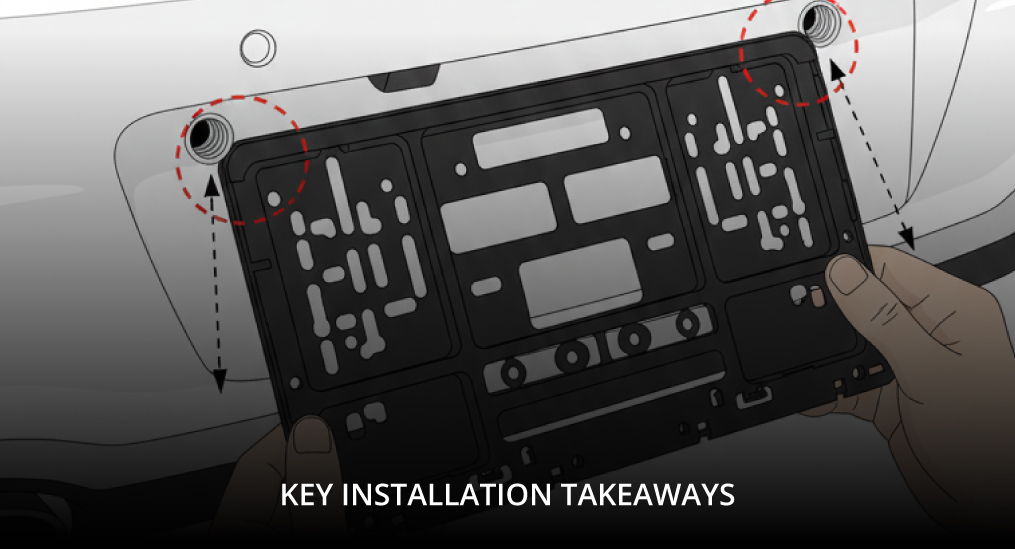
Installing a Snap-On License Plate Frame in Canada is straightforward when done correctly.
- Use factory screw points
- Align carefully
- Engage the snap channel evenly
- Confirm full visibility of required markings.
- No drilling. No paint damage. No rattling. No rust entry points.
- Confirm full visibility of the province name, plate numbers, and validation sticker before driving.
- Check for even snap engagement and ensure screws are snug but not overtightened.
When properly installed, the frame remains secure through Canadian weather conditions without causing paint damage, rattling, or corrosion risk. If you prefer a simplified overview before following this detailed guide, you can also review this step-by-step breakdown. How To Install License Plate Frame In 3 Steps, which summarizes the core installation process.
Frequently Asked Question
What are the legal size requirements for license plate frames in Canada?
Frames must fit standard 6” x 12” plates and cannot cover the province name, numbers, or validation sticker.
Can I install a custom license plate frame in Ontario?
Yes, if it does not block “Ontario,” plate numbers, or the registration sticker, and remains clearly visible.
Do all provinces in Canada require specific frame materials?
No specific material is mandated, but frames must not obstruct plate details or reduce visibility.
How to attach a license plate frame?
Align with factory screw points, secure with original screws, then engage the snap-lock channel evenly.
Is it better to screw or stick number plates?
Screws with factory mounts are more secure. Adhesives can fail in cold weather and may damage paint.