

Drivers across Canada often ask a simple question: are License Plate Frames Legal in Canada on their vehicles? The short answer is yes, but only under certain conditions.
Canadian provinces allow frames as long as they do not block any essential information on the plate.
The rules focus less on the frame itself and more on whether the plate remains fully visible. If the frame hides the province name, plate numbers, or validation sticker, a driver could face a ticket.
Many people don’t realize that even frames provided by dealerships can technically violate visibility rules.
Understanding what makes a legal license plate frames setup is the best way to avoid fines while still protecting the plate and surrounding paint.
Are License Plate Frames Illegal in Any Canadian Province?
No Canadian province completely bans license plate frames. However, frames become illegal if they obstruct the visibility of plate information.
Why Plate Visibility Matters for Canadian Law
Canadian traffic laws prioritize one simple requirement: license plates must be readable at all times. Police officers, toll systems, and traffic cameras rely on clear plates to identify vehicles quickly. When a frame blocks any part of that information, it becomes a problem.
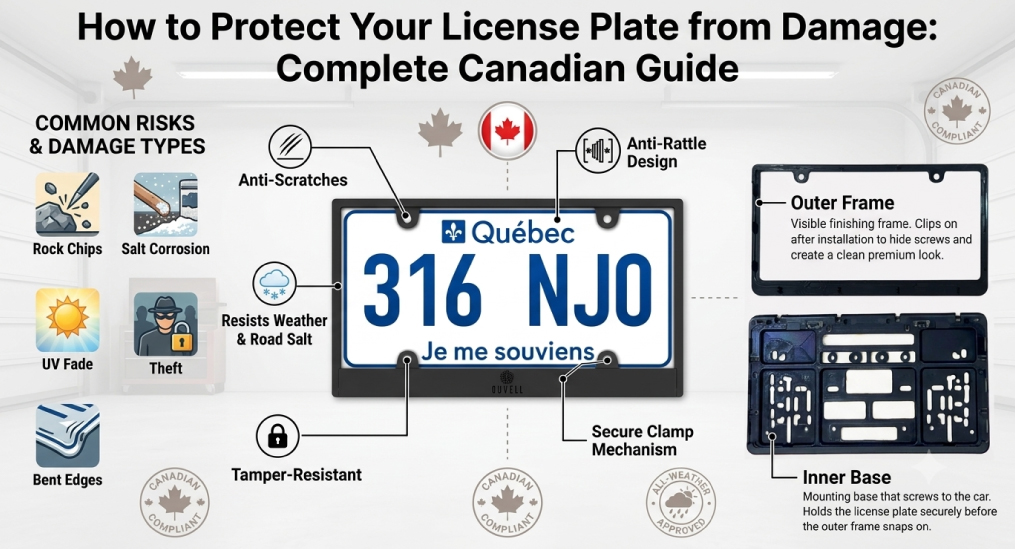
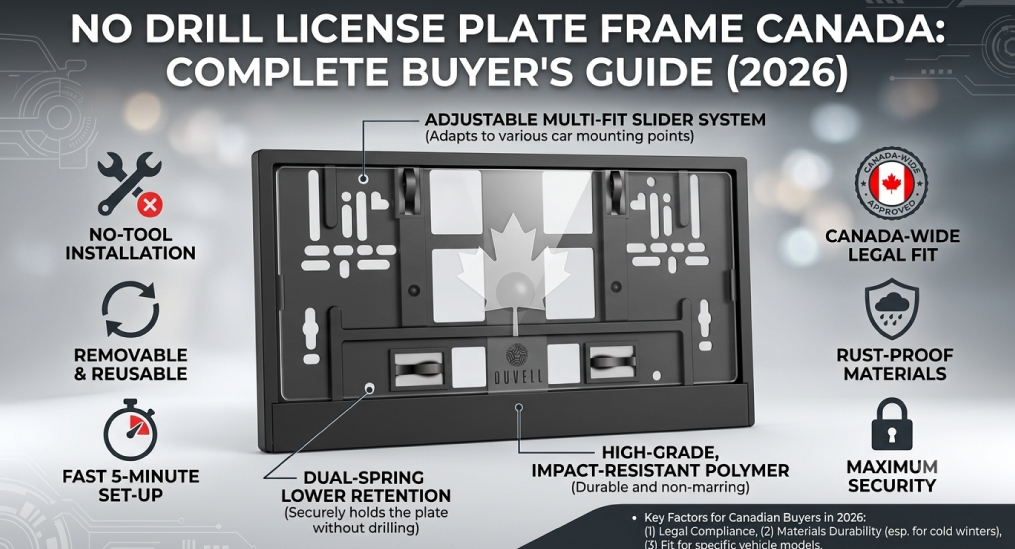
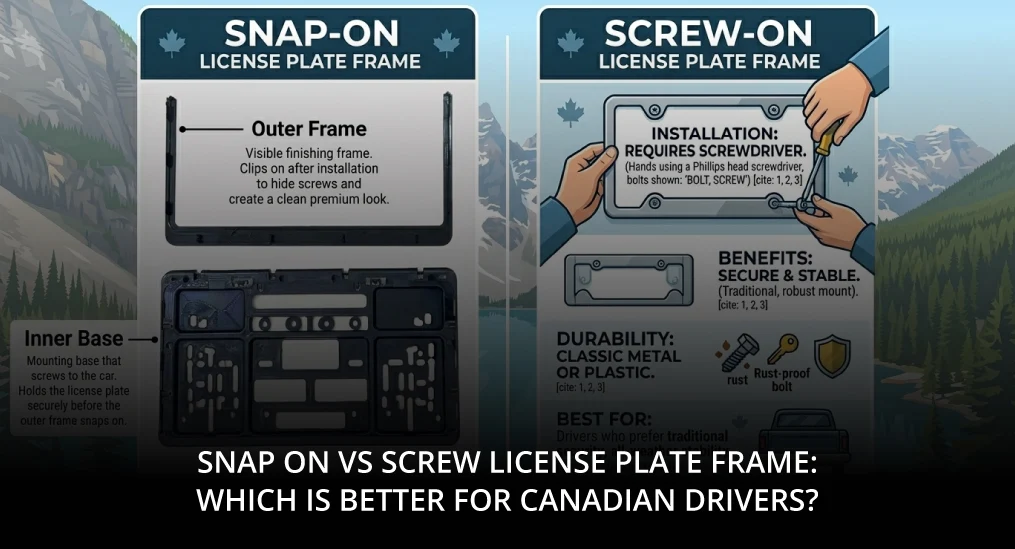
A Snap-On License Plate Frame works well because it holds the plate firmly while keeping the edges open. The frame sits around the perimeter rather than overlapping important text, which helps maintain full visibility.
This design matters more than many drivers realize. Plates are exposed to weather, vibration, and road debris. A loose frame can shift slightly over time, slowly covering characters or stickers. When that happens, a driver may unknowingly break the rule tied to License Plate Frames Legal in Canada regulations.
The safest approach is always to choose a frame that fits precisely around a standard Canadian plate and leaves all markings unobstructed.
License Plate Frame Laws by Province
Although Canada does not have one national traffic law, most provinces follow similar principles when it comes to license plate visibility.
In Ontario, the Highway Traffic Act requires that plates remain clearly visible and free from obstruction. Even a small frame that covers the word “Ontario” can lead to a fine. Officers often add this ticket during routine traffic stops if the plate is partially hidden.
British Columbia has similar guidelines under its Motor Vehicle Act. The plate must remain readable, and drivers can be fined if frames make the plate illegible. Alberta follows the same principle, emphasizing that numbers and registration details must stay unobstructed.
Because of these consistent rules, drivers focus on searching for designs that avoid covering any part of the plate. A frame that fits precisely around the plate without overlapping edges helps maintain compliance with License Plate Frames Legal in Canada requirements. This is why these are the best license plate frames Canada drivers can use.
Understanding the local interpretation of license plate frame legal canada guidelines helps drivers avoid unnecessary tickets while still using a protective frame.
What Makes a License Plate Frame Legal In Canada
The difference between a legal and illegal frame usually comes down to visibility. If any part of the plate information is hidden, the frame may violate provincial regulations.
Drivers often assume that only numbers matter, but several other details must remain visible. These typically include the province name, validation stickers where used, and reflective elements built into the plate.
By knowing how to install license plate frame canada properly, drivers can ensure the plate sits centred and fully visible. Correct installation prevents shifting that could slowly block characters or stickers.
A properly mounted frame also reduces rattling and vibration. Over time, those small movements can push frames slightly out of alignment. When the frame stays snug, the risk of accidental obstruction drops significantly, helping maintain compliance with License Plate Frames Legal in Canada guidelines.
This is another reason legal license plate frames are usually designed with minimal edges and precise measurements that match the 6 by 12 inch Canadian plate standard.
Winter Conditions Can Affect Plate Visibility
Canadian winters add another layer of complexity. Snow, slush, and road salt often collect around the plate area, especially during long highway drives.
A License Plate Frame for Winter can help keep the plate stable while minimizing areas where snow can build up. When frames have large decorative borders or deep edges, slush tends to collect and freeze there.
Drivers sometimes discover after a snowstorm that ice has formed along the bottom of the frame. When that buildup spreads across the plate, visibility drops quickly. That can technically violate the visibility requirement associated with license plate frame legal canada rules.
Minimal frames allow snow and moisture to slide off more easily. They also reduce the chance of ice expanding and pushing the frame out of place during freeze-thaw cycles.
Keeping the plate clear during winter is just as important as choosing the right frame design.
Common Reasons Drivers Get Tickets for Plate Frames
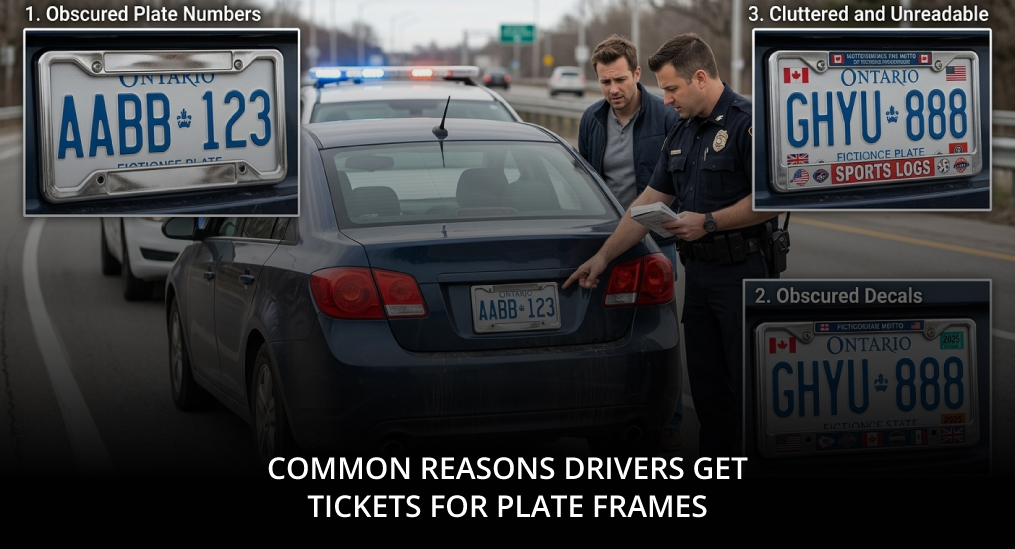
Many drivers receive plate-related tickets without realizing what caused the problem. In most cases, the issue comes down to small details that block part of the plate.
One common mistake is using decorative frames that cover the province name. Another is installing frames slightly off-center so that one corner overlaps a number.
Even clear plastic plate covers can create glare for traffic cameras or police headlights at night. In some provinces, these covers are treated as obstructions because they affect readability.
Drivers often assume their frames are safe simply because they came from a dealership. However, those frames frequently include branding along the bottom edge, which can partially cover slogans or text and may not meet License Plate Frames Legal in Canada requirements.
These situations show why understanding license plate frame legal canada requirements is important for everyday drivers.
Choosing the Right Frame for Canadian Roads
Drivers want a frame that protects the plate without introducing legal risk. That balance comes down to fit, material, and overall design.
The best frames are built specifically for Canadian plates and avoid thick borders or decorative panels. Durable plastic materials also help prevent rust stains that sometimes appear with metal frames after a few winters.
When a frame fits tightly against the plate, it reduces vibration and prevents the metal plate from rubbing against the vehicle’s paint. This helps protect the area around the mounting points while maintaining plate visibility in line with License Plate Frames Legal in Canada requirements.
Practical designs tend to last longer as well. Canadian vehicles experience temperature swings, road salt exposure, and rough pavement that can loosen poorly designed frames over time.
Choosing a well-fitted frame helps ensure drivers stay within the rules while keeping the plate area protected year-round.
Keeping Your License Plate Frame Compliant
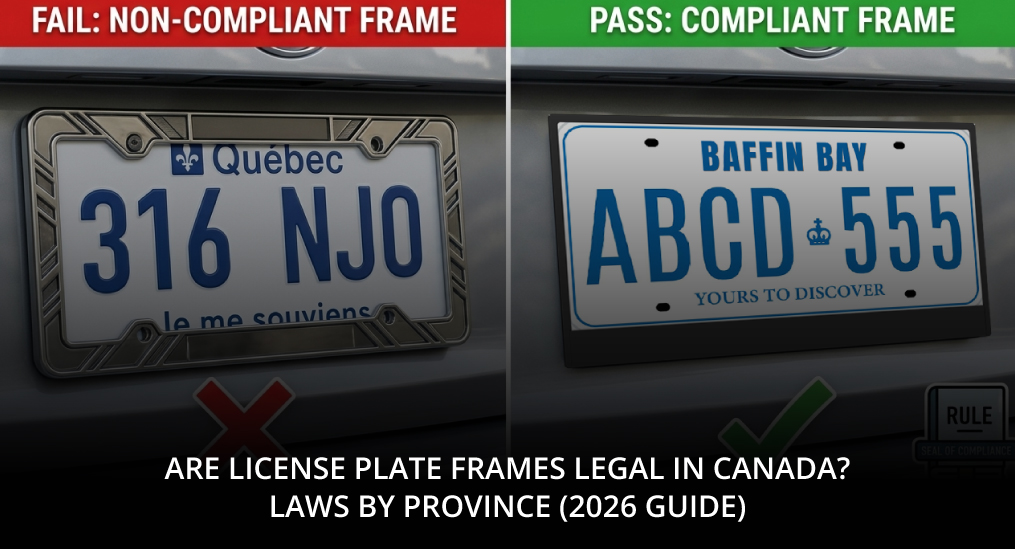
Staying compliant with plate visibility rules does not require complicated steps. Most of the time, a quick visual check is enough.
Drivers should confirm that the province name, numbers, and any stickers remain fully visible from a short distance behind the vehicle to stay compliant with License Plate Frames Legal in Canada guidelines. It is also a good idea to check the plate after washing the car or driving through heavy snow.
During the winter months, brushing snow away from the plate should become part of the routine before driving. Ice buildup can quickly hide numbers even when the frame itself is perfectly legal.
Frames designed with clean edges and a precise fit tend to make these checks easier. They hold the plate steady without covering critical details.
When installed properly and kept clear of snow or dirt, a well-designed frame can remain compliant in nearly every province across Canada.
Frequently Asked Question
Which provinces ban license plate frames outright?
No province bans frames completely. However, any frame that hides numbers, province names, or stickers can violate visibility laws and lead to fines.
Can a frame with a logo still be considered legal?
Yes, a logo frame can be legal if it does not block the province name, plate numbers, registration stickers, or reflective elements.
What penalties exist for using illegal plate frames?
Penalties vary by province. Drivers may receive fines for obstructed plates, and police may require the frame to be removed.
Are plate frames illegal in Ontario?
No. Frames are allowed in Ontario if they do not cover the word “Ontario,” the plate numbers, or the registration sticker.
Is it against the law to have a frame around your license plate?
Not necessarily. Frames are legal if they do not block required plate information or reduce the plate’s visibility.
Do you need a frame around a license plate?
No. Frames are optional. Many drivers use them to protect the plate area and prevent rattling or paint damage around mounting points.