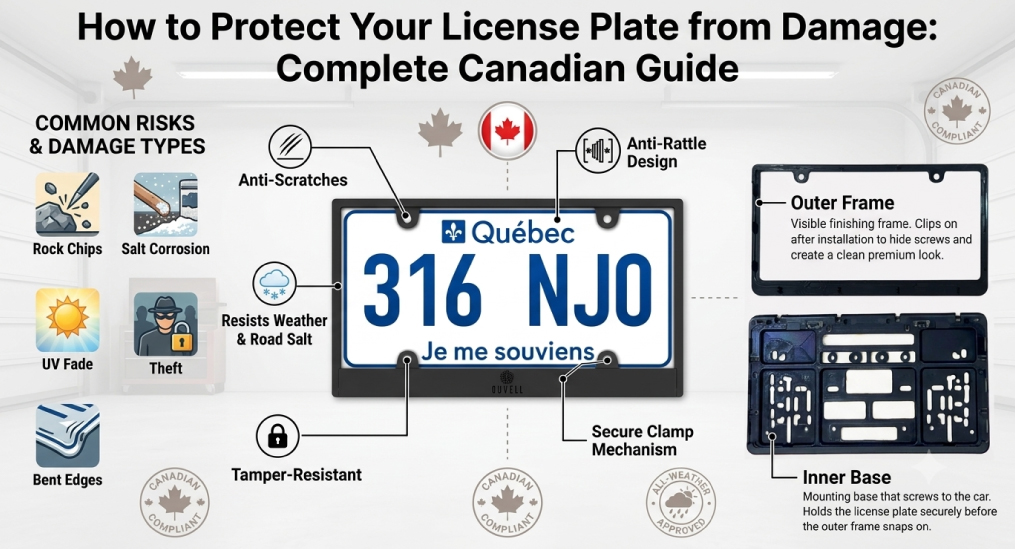


Many drivers do not realise how much stress the license plate frame faces daily. Road salt, moisture, and debris slowly weaken low-quality materials over time.
Choosing the right license plates and frames means looking beyond style. It involves checking fit, strength, and how well it handles Canadian driving conditions throughout the year.
When searching for the best license plate frames Canada offers many versatile choices, but not all of them fit. Some fail in winter conditions, while others do not match standard plate sizing.
Why the Right License Plate Frame Matters
A frame is not just an accessory. It plays a key role in protecting your plate and maintaining its readability.
A poorly fitted license plate frame can lead to damage, noise, and even fines if the plate becomes hard to read. Drivers across the country are now paying more attention to quality and fit.
When choosing between different license plate frames canada, durability should always come first.
- Protects edges from bending and long-term wear
- Keeps plates stable and prevents rattling noise
- Maintains clear visibility for legal compliance
- Adds a clean and finished look to your car
- Reduces vibration during high-speed driving
- Helps extend the life of your plate
Best Materials for a License Plate Frame
The material you choose affects how well the frame performs over time. Canadian weather makes this decision more important.
Plastic License Plate Frames
Plastic frames are light and low-cost. However, they can become brittle in freezing temperatures and may crack after repeated exposure to cold.
Metal License Plate Frames
Metal options like stainless steel offer strength and durability. They handle pressure well but need a proper coating to prevent corrosion.
Silicone License Plate Frames
Silicone is flexible and resistant to weather changes. It absorbs impact and reduces noise, making it a practical option for daily use.
A snap-on license plate frame is often preferred for its secure fit and simple design. It is made of ABS plastic and reduces movement and helps maintain alignment during long drives.
How Canadian Weather Affects Your License Plate Frame
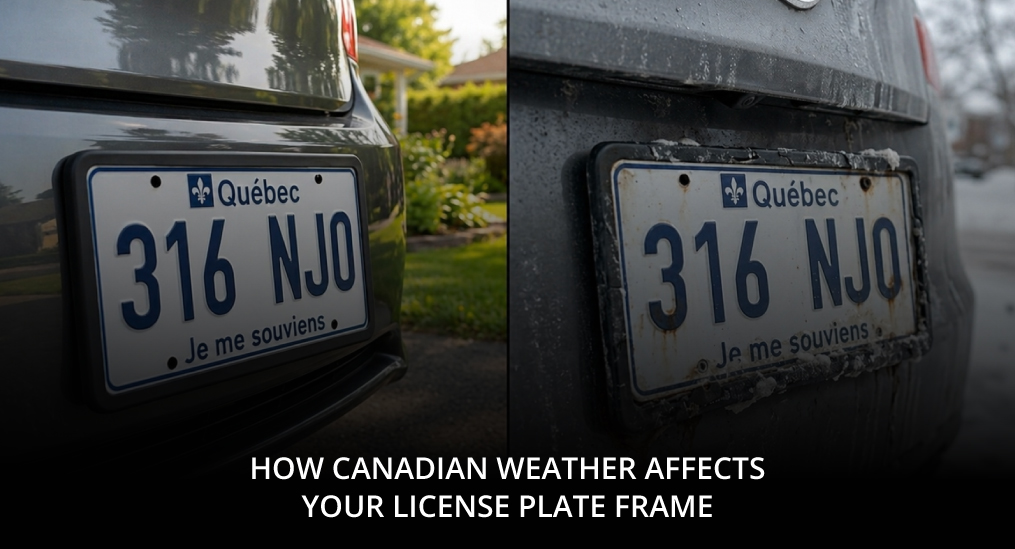
Weather plays a major role in how well your frame performs. Each season brings its own challenges.
1. Winter Driving Conditions
Snow and road salt can cause damage quickly. A strong license plate frame for winter should resist cracking and prevent rust buildup.
2. Summer Heat Exposure
Direct sunlight can fade colours and weaken weaker materials. UV-resistant coatings help maintain the frame’s appearance.
3. Moisture and Corrosion
Frequent rain and humidity increase the risk of rust. Choosing corrosion-resistant materials helps avoid early damage.
Drivers often underestimate how much the climate can affect license plates and frames. Choosing wisely reduces replacement costs.
Fit and Compatibility for Canadian Vehicles
Not every frame fits every car perfectly. Even though Canadian plates follow a standard size, frame designs can vary.
- A properly fitted license plate frame ensures:
- No obstruction of numbers or letters
- Clear display of province name and stickers
- Even alignment with the car body
- Secure mounting without bending
- Reduced movement during driving
Drivers looking into car license plate frame options should always check compatibility before buying.
Are License Plate Frames Legal in Canada?
Understanding local regulations is important before choosing a frame.
Many drivers often ask: Are license plate frames legal on their vehicles? The short answer is yes, but only under certain conditions.
Frames must not block any important details on the plate. This includes numbers, letters, and registration stickers.
Rules may differ slightly by province, but visibility is always the main requirement.
How to Install a License Plate Frame (Step-by-Step)
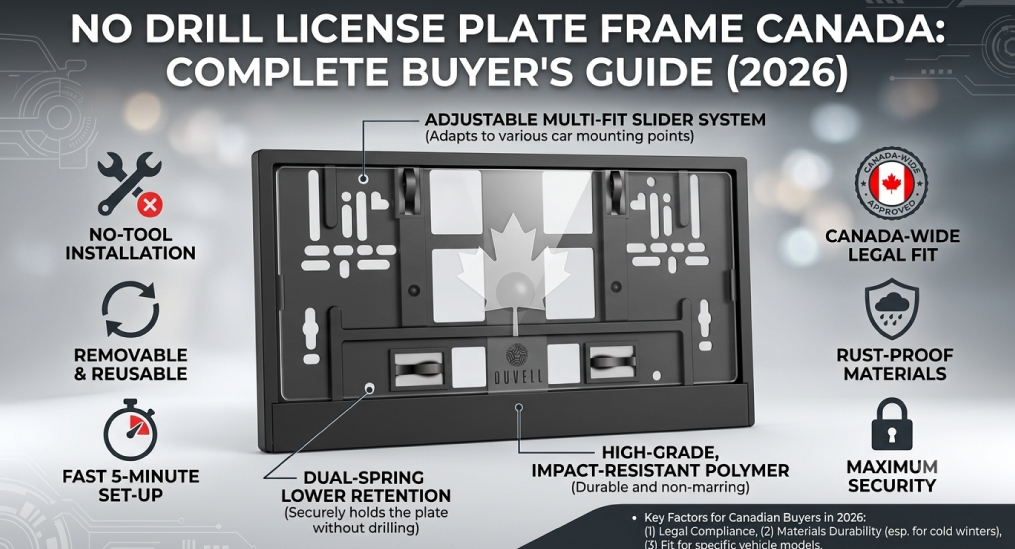
Many drivers searching for how to install license plate frame in Canada assume it requires special tools.
With a snap-lock design, it does not.
The mounting screws secure the base alignment, while the snap channel prevents vibration.
Proper installation helps prevent long-term issues. A loose frame can damage the plate or create noise while driving.
A well-installed license plate frame stays secure even on rough roads.
Best License Plate Frame Styles for Different Vehicles
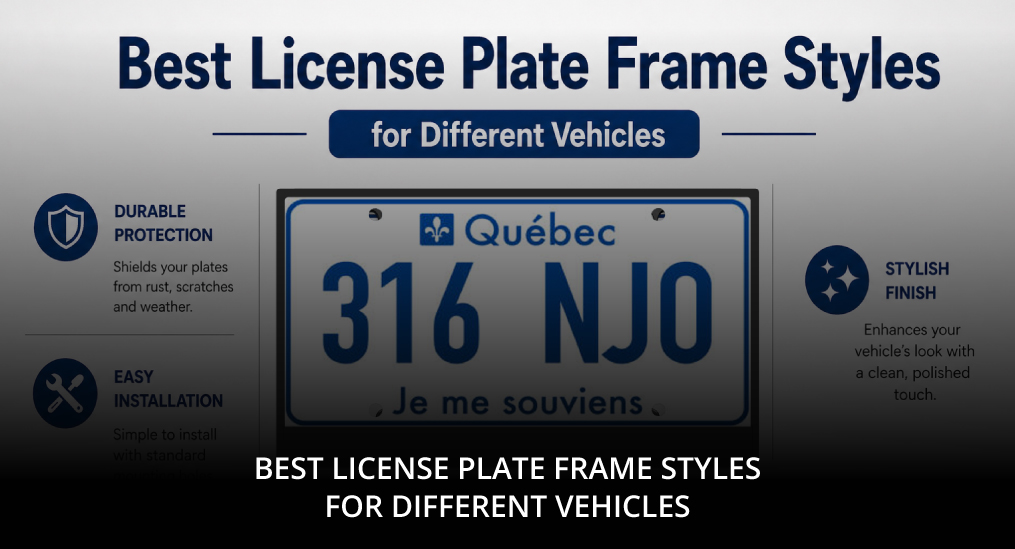
While function matters, design still plays a role in your final choice. A clean frame improves the overall look of your car.
Common styles include:
- Slim frames that keep a low visual profile
- Matte finishes for a modern appearance
- Glossy coatings for a polished look
- Neutral colours that match most vehicles
- Minimal branding for a subtle finish
- Durable coatings that resist fading
Choosing a style that matches your vehicle helps create a balanced appearance.
Common Mistakes When Choosing a License Plate Frame
Different vehicles benefit from different frame styles. Size and design both matter.
1. Compact Cars
Smaller cars often suit slim frames that do not overpower the rear design.
2. SUVs and Trucks
Larger vehicles can support thicker and stronger frames for added durability.
3. Premium Vehicles
Drivers often look for refined finishes when selecting frames for luxury models. For example, those exploring a bmw license plate frame Canada usually prefer clean designs that match the car’s overall look.
Drivers often ask where to buy license plate frames. The answer depends on quality and reliability.
Trusted brands focus on proper sizing, durable materials, and long-term performance. This is especially important in Canada’s climate.
Avoid choosing based only on price. A low-cost frame may need frequent replacement.
Common Mistakes to Avoid
Many drivers make simple mistakes when selecting a frame. These can lead to poor performance or legal issues.
- Choosing style over durability in harsh weather
- Ignoring proper fit for Canadian plate sizes
- Installing frames without securing the screws properly
- Selecting materials that crack in cold temperatures
- Overlooking legal visibility requirements
- Buying low-quality products that wear out quickly
- Avoiding these mistakes helps ensure better long-term use.
Maintenance Tips for Long-Term Use
Even durable frames need regular care to stay in good condition.
Here are simple maintenance steps:
- Clean regularly to remove salt and dirt buildup
- Check mounting screws every few months
- Avoid harsh cleaners that damage coatings
- Inspect for cracks after winter driving
- Replace worn frames before they fail
- Keep the plate surface clean and visible
These steps help extend the life of license plates and frames.
Select A License Plate Frame That Fits And Suits Your Car
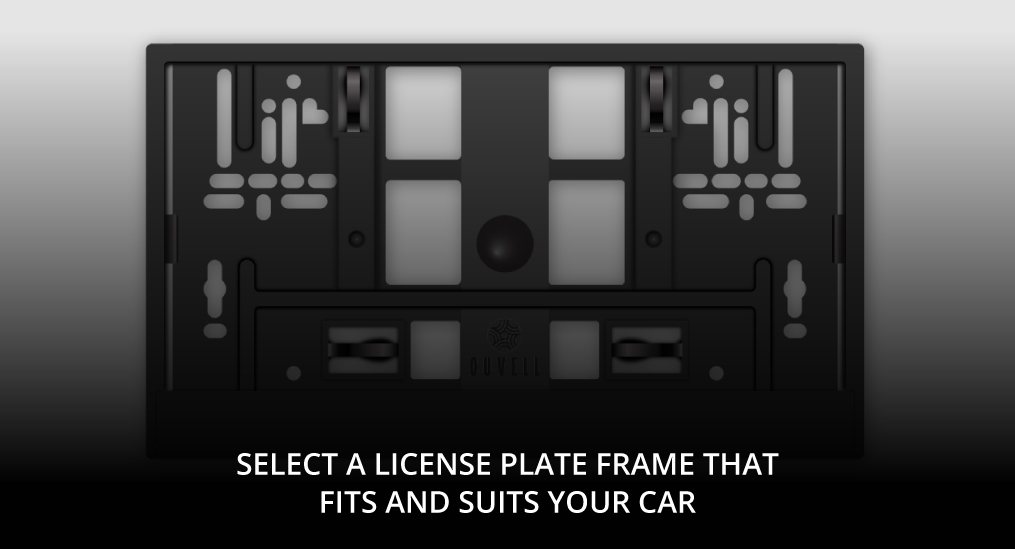
Choosing the right license plate frame involves more than just picking a design. It requires attention to material, fit, and climate performance.
Drivers in Canada need frames that can handle extreme weather while maintaining a clean look. A well-made frame protects your plate and supports long-term use.
Taking the time to choose carefully reduces future problems and ensures your vehicle stays both functional and visually polished. For a more detailed breakdown, you can also read Choosing the Right License Plate Frame for Your State: a Guide.
Frequently Asked Questions
What is the best material for a license plate frame in Canada?
Silicone and coated stainless steel are ideal. They resist cold, moisture, and road salt, ensuring durability and preventing cracking or corrosion over time.
Are license plate frames legal in Canada?
Yes, as long as they don’t block numbers, letters, or registration stickers. Visibility and readability are the key legal requirements across provinces.
Do all license plate frames fit Canadian vehicles?
No, not all frames fit perfectly. Always check for standard Canadian sizing to ensure proper alignment, secure mounting, and no obstruction.
How do I prevent my license plate frame from rattling?
Choose a snug-fit or snap-on frame and tighten screws properly. Silicone frames also help absorb vibration and reduce noise during driving.
How often should I replace my license plate frame?
Inspect it yearly, especially after winter. Replace it if you notice cracks, rust, or looseness to maintain plate protection and compliance.